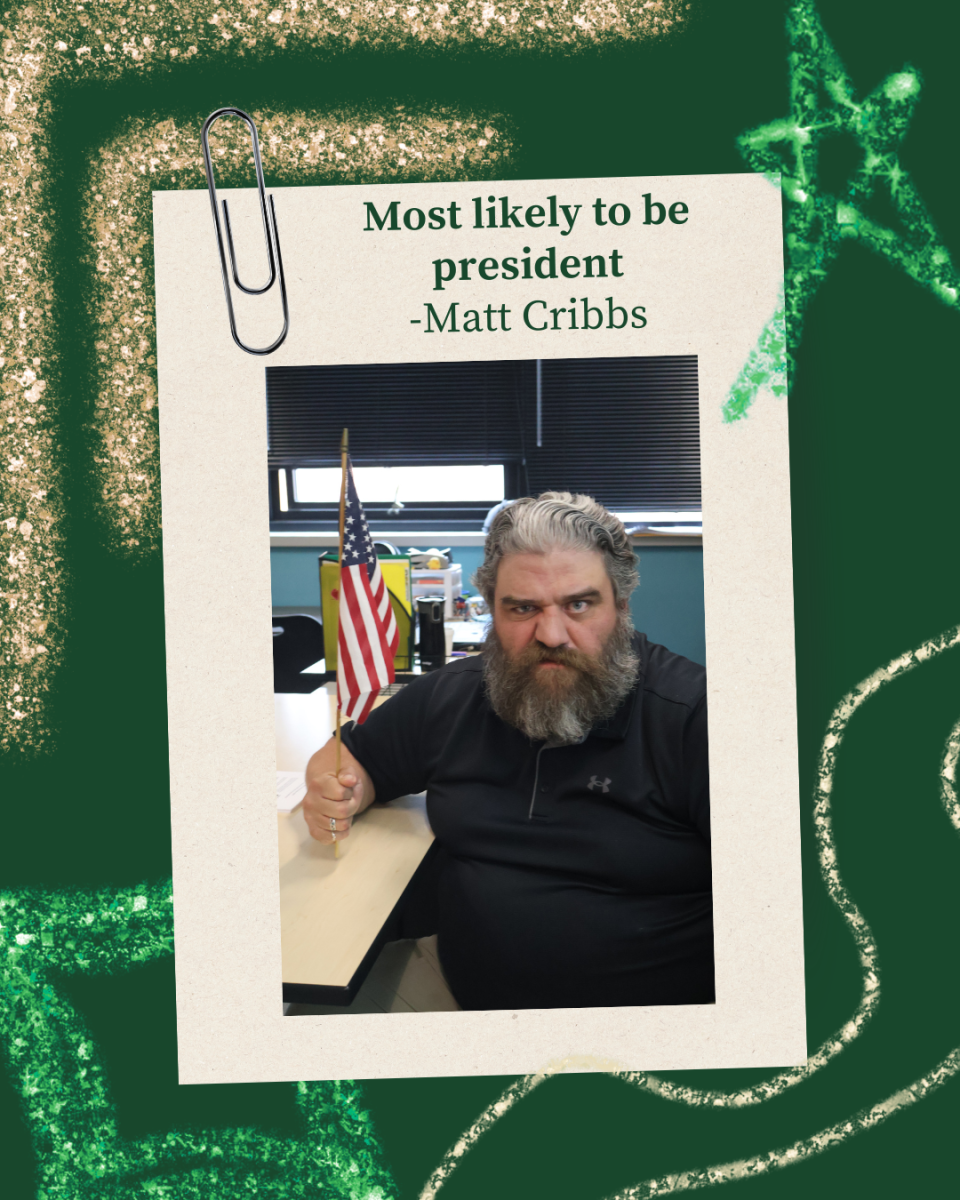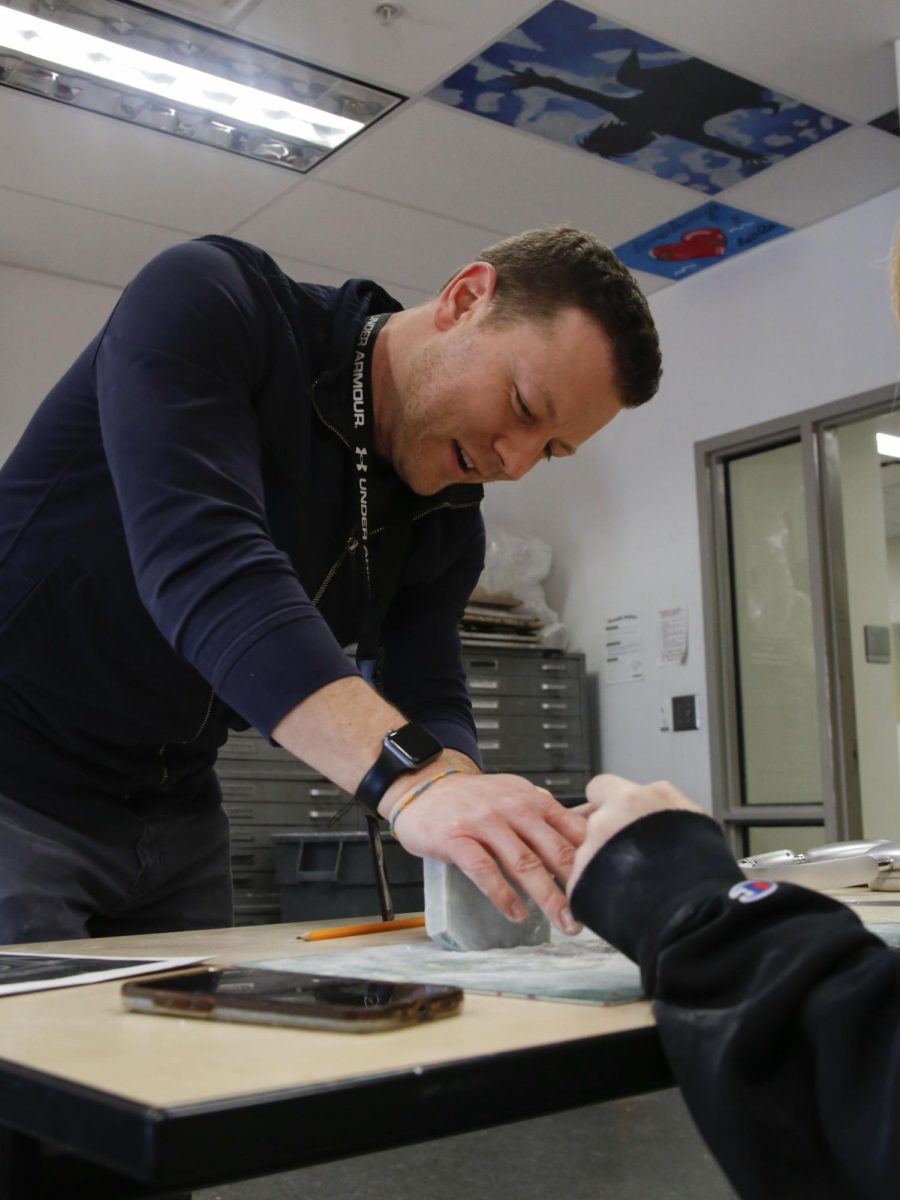
Cliffton Seemann, an art teacher at GlenOak High School, is preparing to leave the classroom after six years at the high school and eight years in the district. Seemann will begin focusing more of his time on his business and family as a result of continuing health issues.
“What originally inspired me to become a teacher was my wife,” Seemann said. “She saw how much I did with the community coaching for the YMCA, volunteering for church clubs, boys and girls clubs, teaching summer classes. She looked at me one day and said, ‘Why don’t you become a teacher?’
Seemann left his job at a bank and returned to school to earn his teaching license. His passion for mentoring is rooted in his childhood and the influence of a mentor named Bill Hamill, who stepped in as Seemann’s parents struggled with personal and financial issues.
“He was like a dad to me; he couldn’t have children of his own, but he always wanted to be a dad, and I didn’t have one in my life, so we clicked,” Seemann said. “He took me to sporting events, taught me how to lift weights, and helped me with homework.”
The impact Hamill had on Seemann is the same impact he strives to have on his students.
“He showed me what a positive influence could be, and it made me realize it doesn’t have to be your dad that impacts you,” Seemann said. “I want my students to know they have the power to do great things.”
Seemann shared an example of how he has seen growth in a student.
“This student used to get frustrated with people, and I would always tell her, ‘Don’t let people get under your skin,’ and now she checks in with me every morning and wears shirts that say,’ treat people with kindness, she goes out of her way to do something for a friend,” Seemann said. “It’s those things that are going to change the world, it’s not just our grades, it’s who we are as people when we leave this place.”
Despite his passion, years of overworking have taken a significant toll. Seemann manages a full-time teaching job alongside coaching and running a business. This lifestyle has led to serious medical concerns, including arrhythmia.
“Teaching has been my identity; that’s one of the hardest things to grapple with. I don’t want to leave, but it’s something I have to do,” Seemann said.
His family has been a primary factor in this decision.
“My wife and kids are the driving factor because they know how much this job means to me, but they also see that I bring the stress of it home,” Seemann said. “If a student is dealing with something heavy, I carry that with me and wish I could do more. My family wants me to be more present because even when I’m home, I’m working.”
Seemann wants students to know it’s ok to seek help when they are struggling
“I never wanted to go to therapy. I was a person who thought therapy couldn’t help me because I already know what’s going on, Seemann said.” Until I realized that it’s okay to not be okay and that none of us have all the answers”.
Outside the classroom, Seemann built a business selling antiques and collectibles his father had accumulated over the years, which began as a way to help his father pay for Stage 3 melanoma treatments. His father initially resisted selling the collection and agreed to the plan only because he believed Seemann’s promise to generate $10,000 in a few months was impossible.
“I didn’t know anything about antiques, but I did research, started eBay and Etsy accounts, and networked with people at the Hartville Flea Market and estate sales; through those avenues, I was able to raise $20,000 in five months,” Seemann said.
Seeman is still selling antiques mostly in bulk from estates and purchases of large collections and the business has now become his primary source of income
“When it comes to the business it provides for my family and a majority of the bills, whereas teaching allows me to give back the most, but also takes the most time and doesn’t provide as much financially, I’ve got to go with the other one,” Seemann said.
As he prepares for his next chapter, Seemann wants to leave his students with advice.
“Do what makes you happy, but if you’re doing things to please others at the expense of yourself, that’s not healthy,” Seemann said. “We can’t control how other people treat us, but we can control how we react.”
Seemann hopes he can continue to make an impact on the youth through volunteering as he has done in the past and someday if he is able to return to teaching.