For students enrolled in GlenOak’s International Baccalaureate diploma program, the end of the school year looks a little different. While many of their classmates wind down, full diploma IB Seniors face cumulative exams covering two years of content across six different subjects, all at once.
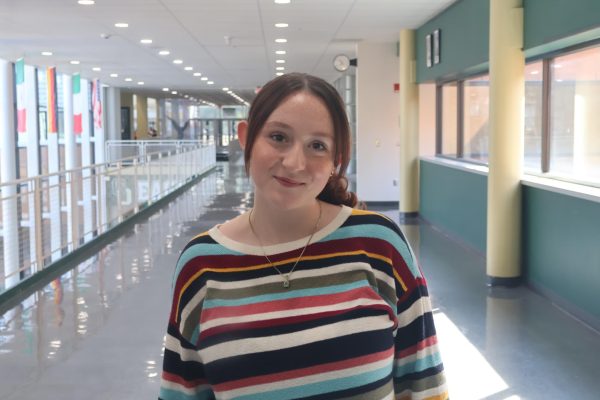
Senior Hannah Pace, who is completing the full IB diploma program this year, said that what exam season demands caught her off guard compared to anything she has faced before.
“I have six exams coming up, so I study almost every day,” Pace said. “For my math, my French, and my two sciences, I study for at least one of them every day for at least an hour.”
Beyond the exams themselves, IB students are also responsible for completing internal assessments, an extended essay, a theory of knowledge presentation and CAS hours throughout the program. Pace said these assessments, as demanding as they are, have been some of the most important parts of IB when it comes to preparing her for college.
“They taught me how to write an extended research paper on my own, how to do statistical analysis, and how to manage my time a lot better,” Pace said. “Writing a 4,000 word paper is no small feat.”
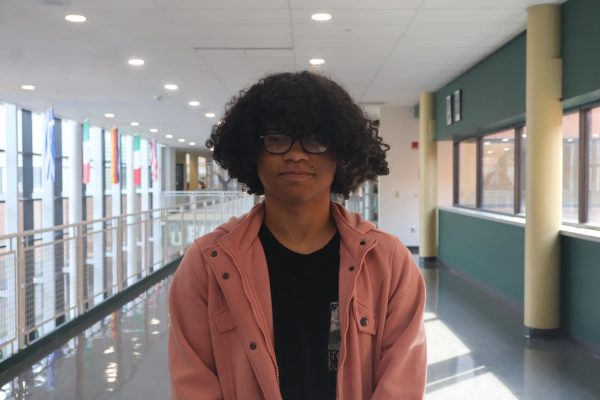
Mirren Grimason, a 2025 GlenOak graduate now finishing her freshman year at Syracuse University, said those same skills carried directly into her college classes.
“In college, you get maybe two or three weeks’ notice about an essay that can be 1,000-3,000 words long,” Grimason said. “Learning how to write long-form analytical essays in a short amount of time was definitely a skill I gained from IB.”
Grimason said the IB program is fundamentally different from AP courses, which she believes better prepares students for large lecture-style classes. IB, she said, is built around writing, analysis and a deeper focus on subjects.
“I had an essay due the second week of class and I was like, woah okay,” Grimason said. “But I was able to do it. I feel like that would be a lot harder of an adjustment for an AP student.”
The extended essay, a 4,000-word independent research paper required for the diploma, was one area where Grimason said the preparation paid off greatly. One class she is currently in requires a 12-page final paper on a very specific topic, and she credits the EE for teaching her how to narrow a subject and put together a long, thoughtful argument.
One area in which IB did not fully align with college, Grimason said, was credit transfer. Despite scoring well on most of her exams, she only earned an English credit at Syracuse.
“If you have any idea where you want to go to college, go look on that school’s website and see what IB tests they accept and what score you need for credit,” Grimason said. “It’s really just a case-by-case basis.”
For Pace, the challenge right now is balance. She runs track, maintains a social life and tries to get good sleep, something she said is even more important during exam season.
“I sleep eight hours a night at least and I eat well, so my mind is fueled to be able to study, ” Pace said. “I also try to take one day a week where I’m not doing schoolwork.”
Both students offered similar advice to underclassmen considering the program and to current seniors heading into exams: take it seriously, but keep it in perspective.
“Don’t stress about them, but don’t not study for them either,” Grimason said. “These exams are an accumulation of the work you’ve put in for two years. Don’t just waste it.”
Pace put it more simply.
“It’ll be fine,” she said. “Like you will literally be fine.”
Whether students are adamantly studying for their exams, or ready to breeze through them this May, the experience will teach them skills to carry on into their higher education.