Prices are jurassically rising, and students are getting creative with how they choose to save. Specifically through apps. Instead of just relying on part-time jobs, allowances, many students like to use phone apps to help save on food, gas, online shopping, ect. As students continuously choose apps to help them save, a new trend emerges: saving money is going digital.
“Only get stuff you need, not just want,” sophomore Carlee Bond said.
Saving does not have to be difficult; however, many don’t know where to start. Spending habits vary, and everyday things get more expensive. According to, Food Price Outlook, since January 2025, inflation has gone up 3.3% as of March 2026.
“Prices have gone up for a lot of necessities, so having apps helps a lot sometimes,” Bond said.
According to Bankrate, the best money-saving apps are Orptun, tracking your checking accounts activity and moving funds into savings. Orptun analyzes the users spending patterns so that it knows the safest amount of money to transfer, so users are never short of cash. Orptun will cost $3.99 a month.
Qapital, using “saving rules,” so users can set up rules like transferring a small amount into savings every time they indulge in something not needed. Qapital can also run debit card services, stashing spare change into savings. Qapital will cost $3 a month.
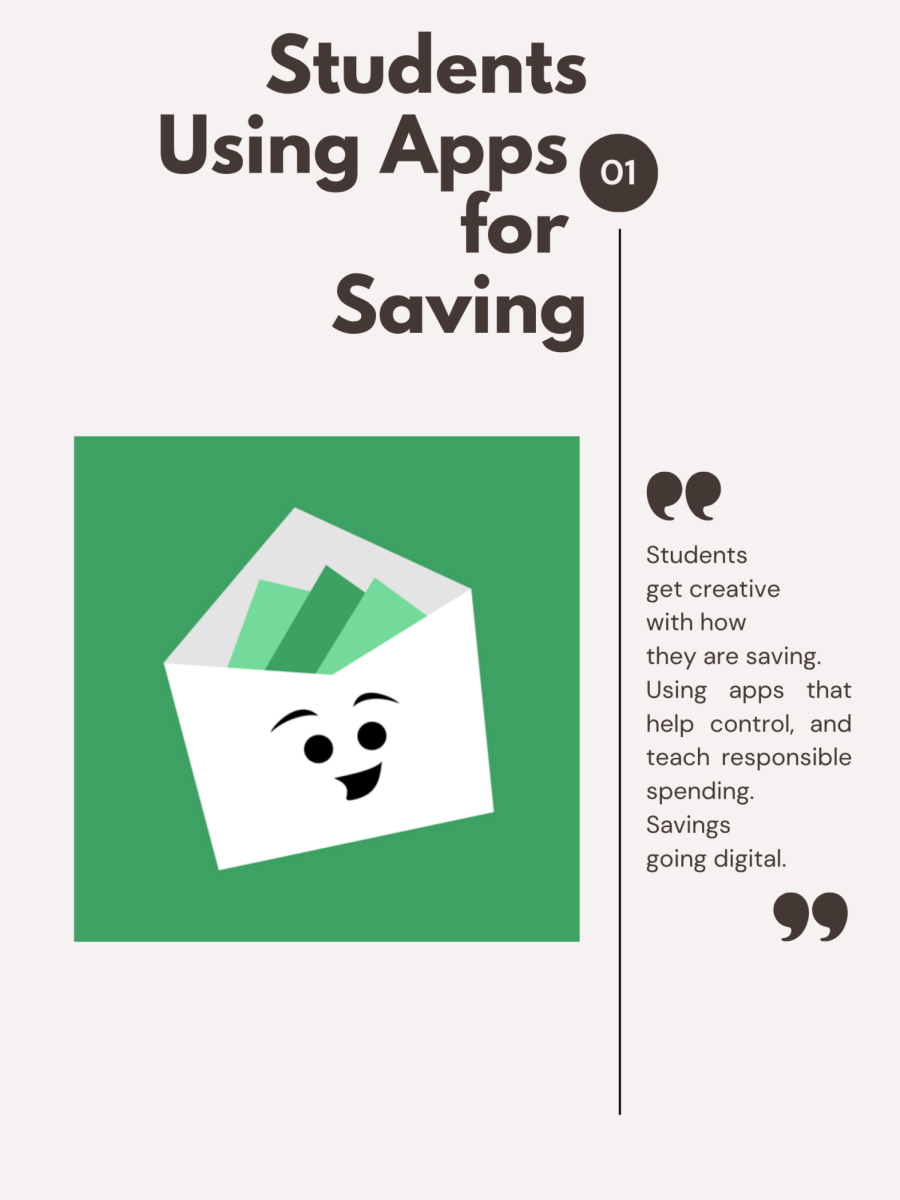
Goodbudget is a manual budgeting system, operating on the traditional “envelope budgeting system.” This is where the user sets aside portions of their money into virtual “envelopes,” for different things like bills, groceries, and savings. Goodbudget does include a free plan.
Money apps don’t stop there, with drive-thru apps helping teens save on places they go and enjoy often.
“I go to Taco Bell a lot when I’m done with after-school activities like practice for shows, so using the app to help save a couple bucks each time is a great help for me,” sophomore Indy Freeman said.
According to The Stillman Exchange, Greenlight is an app that can help teen users manage their money in a smart, organized, and effective manner. This app catagorizes funds into savings, spending and investing. This helps teach users smart financial skills and helps them understand the value of money and where to spend it. Plans range from $5-$20 a month.
However, some people tend to want to spend. With everything at their fingertips, just a tap and it’s theirs. It’s important to know how to control that, and their money. A way to help people that might struggle, you can check your balances regularly, build a simple budget, understand costs and avoid hidden fees, recognize saving and investing as differences, and treat digital money like physical money.
“It’s always worse when you shop with your eyes. You tend to want more than you can actually eat or use, and you end up spending more money than you need to,” Freeman said.
Spending with your eyes, and not buying what’s needed, can lead to out-of-control spending. With an economy like this, and stupid things being advertised, it’s important to realize what’s really important to invest in. These apps are giving students more control over their spending, without replacing original financial lessons; they offer practical, real-world ways for students to start smarter habits.