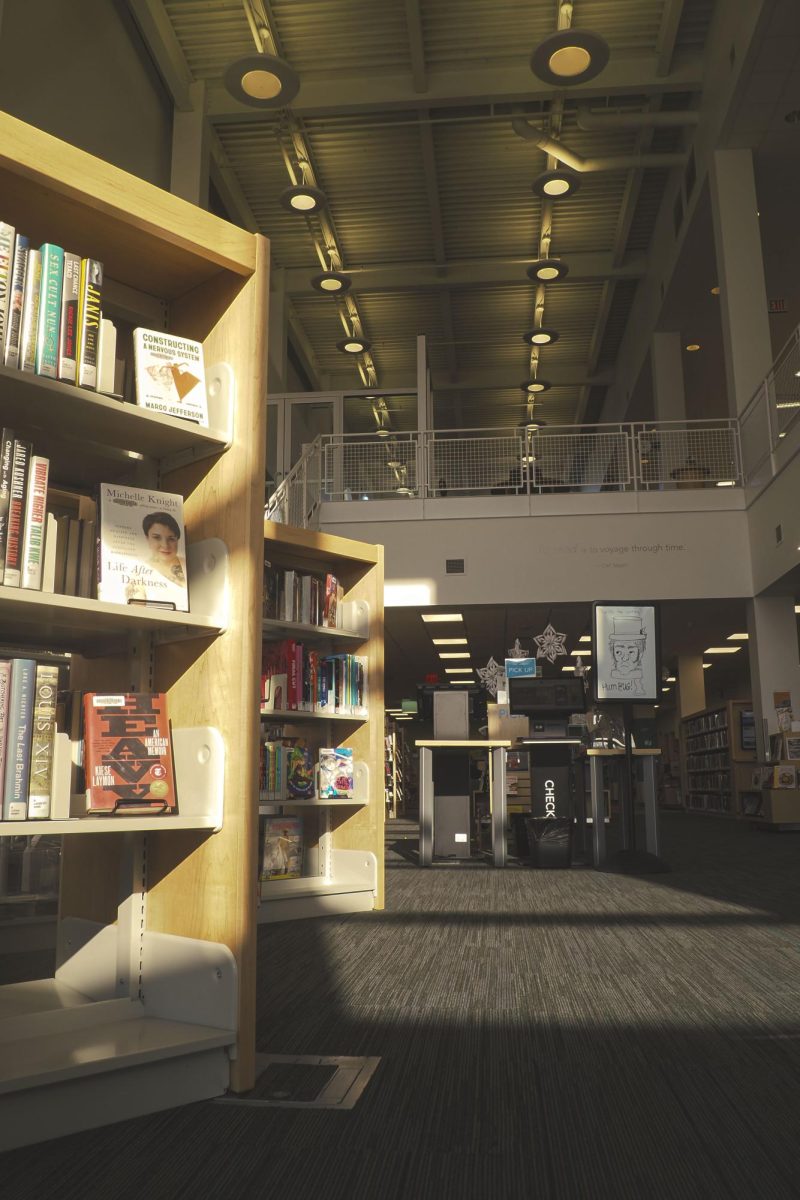
Public libraries offer lots of physical resources, but as time has advanced, more digital resources have been added into libraries. This includes being able to check out books from phones with apps like Libby, as well as adding more computers into the libraries.
Engagement at the library has mainly impacted students since they have introduced digital materials. Fifty-four percent of Gen Z and Millennials visited a physical library within the previous 12 months, according to the American Library Association.
“We do still see students check out a lot of physical materials such as books.” teen librarian Bonnie Capeta said.
Of the Gen Z and millennials surveyed for the American Library Association study, more than half who self-reported visiting a physical library said they also borrow from a library’s digital collection; however, many of the respondents enjoyed physical books more.
The library faces many challenges, the biggest being people who are uncomfortable with technology not understanding how to check out books digitally. So, when it comes down to books only being available digitally, the library does offer technology one on ones to teach people how to use their digital resources
“We do offer things like technology one on ones where one of us will schedule a time to get with a patron and show them how to use Libby or Hoopla on their Kindle, or on their phone or their iPad,” Capeta said.
Capeta cited benefits of using mobile apps for check out, such as patrons do not need to be in the library to check out a book, and they can check out many books and not have to worry about the weight to carry them.
However not everything can or should be moved to digital. Capeta said yearbooks and a lot of genealogy materials has items that have to be kept as hard copies.
As for AI, the library has not been heavily hit yet.
“There are already webinars and events being held for library professionals to learn about how AI is going to impact us,” Capetta said.
The library has evolved in many ways over the years, one of the ways was by removing fines so that people can keep coming back instead of having to return books before they finish them.
Now, as long as the book comes back to the library, they do not mind how late they get the book back.
“I think (the elimination of fines) has very positively impacted people’s relationship with the library. They just kind of stopped coming because they felt stressed about it. Now we don’t do that anymore, as long as the book comes back to us. We don’t care,” Capeta said.