Recently, the top recruit in the 2027 class from Wayne High School, Jamier Brown, filed a lawsuit against OHSAA’s NIL ban claiming that he has lost over $100,000 in potential NIL offers.
Name, image and likeness (NIL) is the system that allows high school and college athletes to profit from their identity through endorsements, sponsorships and other personal brand activities.
Originally in July 2025, only the NCAA had implemented this into its colleges. Looking at the effects of NIL on college sports, many head college coaches had different beliefs on if it is appropriate for students to be making money while still in school.
Bleacherreport interviewed former Alabama head coach Nick Saban on his beliefs on the effects of NIL on college sports, “All the things that I believed in, for all these years, 50 years of coaching, no longer exist in college athletics.”
Seeing the effects of NIL on college sports, OHSAA was originally against NIL. However, when the lawsuit came in, OHSAA took a look at it and realized many rules can be implemented so the athlete is only gaining money based on their platform, not their performance in their preferred sport.
After the voting period that spanned from Nov. 17 to Nov. 21, the majority of schools voted to implement NIL for high school athletes, with 441 schools in favor; it went into immediate effect on Monday, Nov. 24.
When comparing NIL in high school versus college, there are several key differences that stand out. One major difference is that high school athletes are not allowed to be paid to transfer to another school. This rule is designed to protect schools and maintain fairness, making sure that students make decisions based on education and athletic opportunities rather than financial gain.
To understand how these new rules will affect student-athletes, Athletic Director Noah Dockus explained that the OHSAA intentionally designed the policy to keep schools out of the business side of NIL.
“Our job is just to educate the student-athletes on what it is, what the rules are, and then report any violations,” Dockus said. “We don’t have anything to do with their deals or money or providing anything like that.”
If a student signs an NIL agreement, the responsibility is placed entirely on the athlete and their family.
“They have 14 days to report it to OHSAA,” Dockus said. “The student-athlete has to fill out some paperwork, get a copy of their agreement, and report it to OHSAA within 14 days.”
Dockus also emphasized the new rules were written to avoid the problems currently seen in college athletics.
“They cannot be paid based on their performance,” he said. “A company can’t say, “If you score 20 points tonight, we’ll give you $1,000.”
He added that NIL also cannot be used for transfers.
“NIL can’t be used to entice a kid to come to a school. So I can’t say, “Hey, I’m going to give you $10,000 if you go to this school,” Dockus said. “If you can prove that happened, then your rules were broken and there’s going to be consequences.”
Schools and booster groups are also prevented from participating.
“It’s written to be very strictly based on what you as an individual can provide on your own time with your own name, image and likeness,” Dockus said.
Student-athletes also cannot wear school logos or uniforms in NIL content or create sponsored posts during school or team activities.
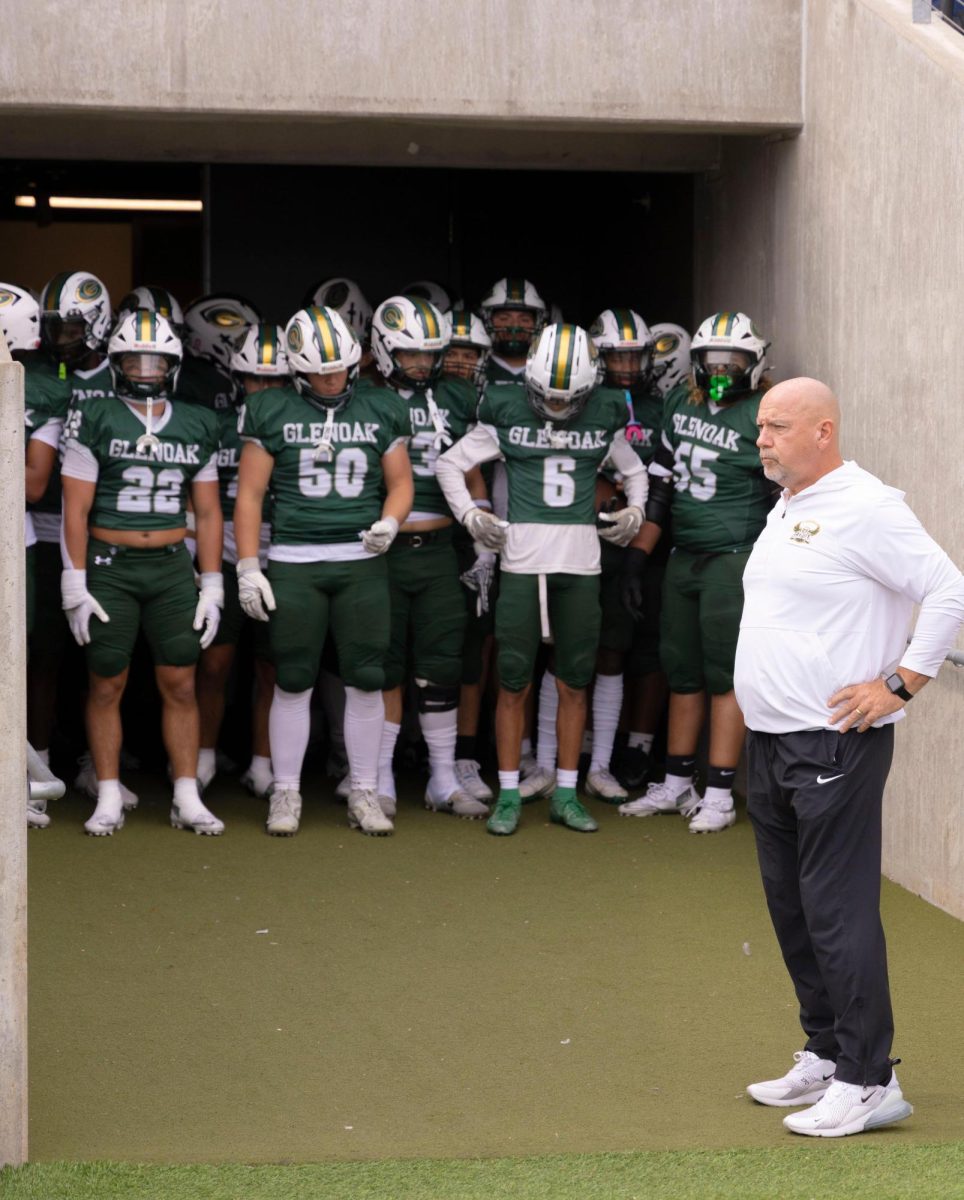
Although none of GlenOak’s athletes have gotten NIL deals yet, Dockus expects that opportunities may arise for students with strong online followings. He still thinks long-term effects remain unclear.
“The OHSAA even said in their memo this is a fluid situation,” he said. “The rules could change even by next spring, just based on seeing how it goes.”
His biggest concern is how NIL might evolve over the next several years.
“Any time there’s money involved, people will try to bend and work around the rules,” he said. “My concern isn’t really the immediate future, but maybe more years down the road, how is this going to evolve?”
For now, Dockus believes the OHSAA’s approach reflects the right priorities.
“They’re trying to protect schools and keep it truly NIL. It’s based totally on that kid and what they’re doing outside of school.”