Every February, hundreds of GlenOak juniors file intoclassrooms to take the American College Test (ACT) free of charge. This opportunity is made possible due to Ohio state law requiring all districts to administer a state-funded ACT or SAT to every 11th grader each Spring. For many students, this is their first official attempt at the ACT.
The ACT is a standardized college admissions test that assesses high school students’ readiness in math, English, reading and an optional science and writing section. The test often influences college admissions, scholarships and future plans.
While covering the fee offsets the cost of students’ first ACT test, many juniors are still left unprepared. Year after year, juniors walk into the exam room feeling uncertain an under-equipped for the type of exam they are about to take. This struggle often follows them into the Summer and school months of their senior year.
For students to be best prepared, GlenOak should offer structured ACT preparation, whether through after-school programs or a course built into the school day.
For many students, uncertainty regarding the ACT begins long before their first testing season.
“I personally do not feel prepared,” junior Lydia Summers said. “I personally do not know where to find study resources for the ACT, and I think there is a lack of communication to students regarding that.”
Summers plans to take the ACT this coming February. This uncertainty often leads to students taking the ACT multiple times. According to the Official ACT website, on average it takes students 2-3 attempts to achieve their testing goals. Repeated taking of the ACT adds up, as the test cost $69. The writing section is an additional $25, and science is an additional $4.
Many students who were in Summers’ position their junior year continue to study for and retake the ACT into their senior summer and school year.
“After my first test I felt awful and I think most other kids did too,” senior Hannah Pace said. “During February when it is cold and most students are trying to balance sports and school, I think adding the ACT onto that, with no provided study sources, makes it very difficult to balance everything and study for the ACT.”
After the first test, students begin to look outside of school for study options. On top of an already expensive exam, study methods can lead to additional cost.
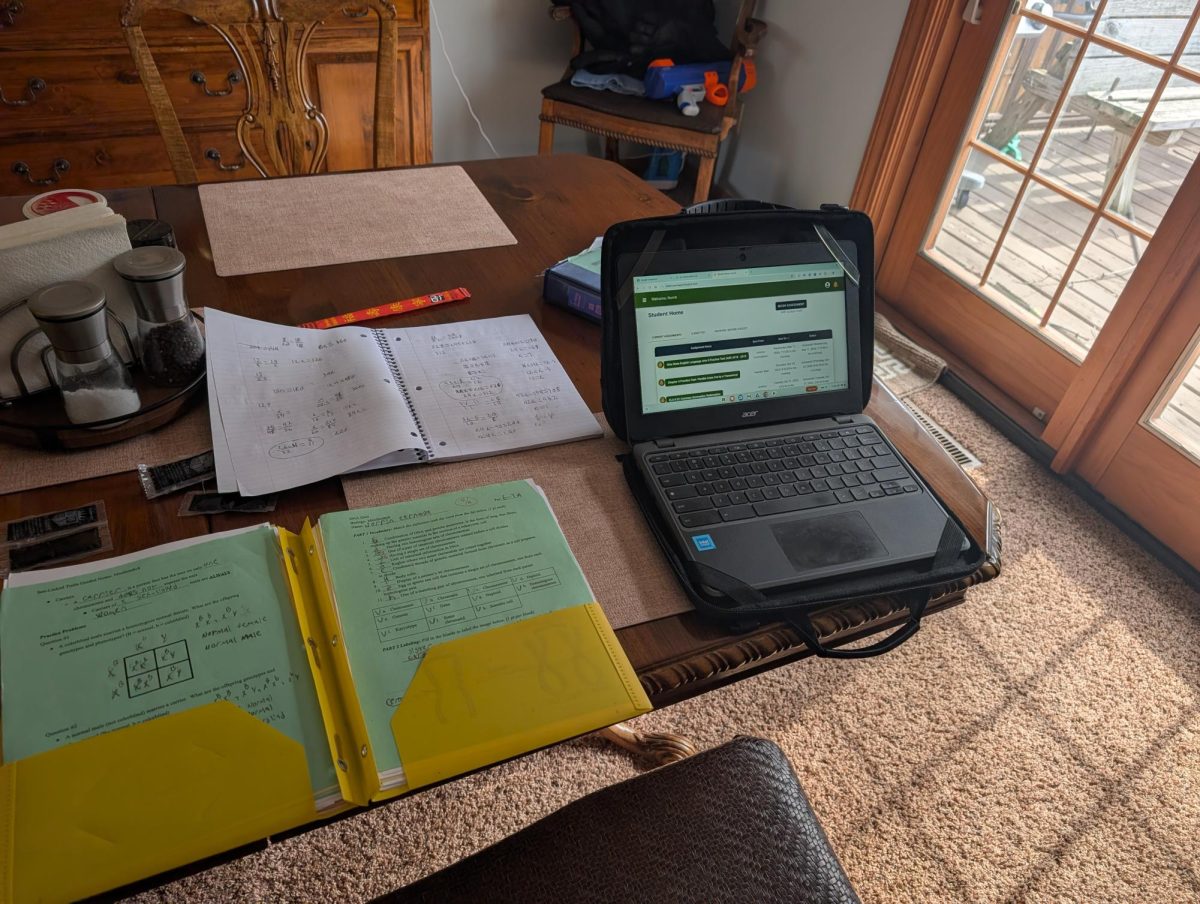
Senior Molly Utterback decided to self-study after her first exam, using ACT prep books, paid websites, and online practice tests. Utterback ultimately found that paid websites are most beneficial.
“They give you feedback on why you got certain answers wrong, and how you can fix those mistakes in the future,” Utterback said.
While self-studying helped Utterback raise her score, she believes a classroom environment would be most beneficial for ACT preparation.
“I think students would be more inclined to learn about what the ACT is and discover that they may be able to get into a more prestigious school than they thought,”
Utterback said. “Also, a group environment would help motivate students to study, which self-studying does not offer.”
Pace found this sentiment to be true with the Princeton Review 31+ ACT Course, her chosen method of studying after her first ACT. The course consists of three three-hour classes a week, as well as around an hour of homework assigned at the end of every class.
“The structure definitely helped, it forced me to study for a set amount of time each week rather than pushing studying off until a few days before the test,” Pace said. “There was also a teacher there to help with homework, test taking strategies and more.”
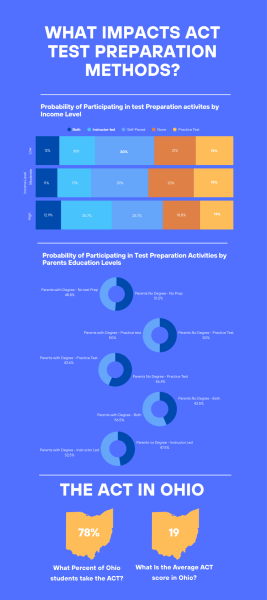
While these methods are beneficial, the cost can add up. The Official ACT test preparation textbook costs approximately $39.95, self-paced online programs range from $90-$400 and it can be $1000+ for premium guided courses.
Unfortunately, not all students have the means to utilize these resources on their own. A course offered at GlenOak could help offset these costs.
“I think having a preparation course that is accessible to the entire student body is something that should be prioritized,” Pace said.
GlenOak could adopt widely available test preparation resources similar to ACT preparation seminars hosted by Hoover High School. These seminars are one day, eight-hour courses hosted during the school day with breaks throughout. Senior Panagiota Tzouloufis attended one of these seminars.
“We reviewed some basic math, grammar and techniques for analyzing charts,” Tzouloufis said. “We also learned strategies on how to best use our time, an example being to answer a series of questions and then bubble them all in at once instead of bubbling our answers after each individual question.”
Tzouloufis found the seminar to be helpful, and would recommend it to other students.
“With no other studying between my [two] ACTs, it helped my score increase by five points,” Tzouloufis said.
GlenOak could also implement an ACT course as an elective class. Having the course during the school day could help combat students’ conflicts with sports and after-school activities, creating time for them to prepare for the ACT during the school day. An after-school program may also be beneficial. For students with full schedules, a test preparation course hosted 2-3 times a week after school may be the most effective. It will ensure students have a set study plan to avoid procrastination and also give them a tutor to work with in person.
Overall, providing structured, accessible ACT preparation would empower all students to do well on the test and ensure juniors are getting the most out of their free exam.