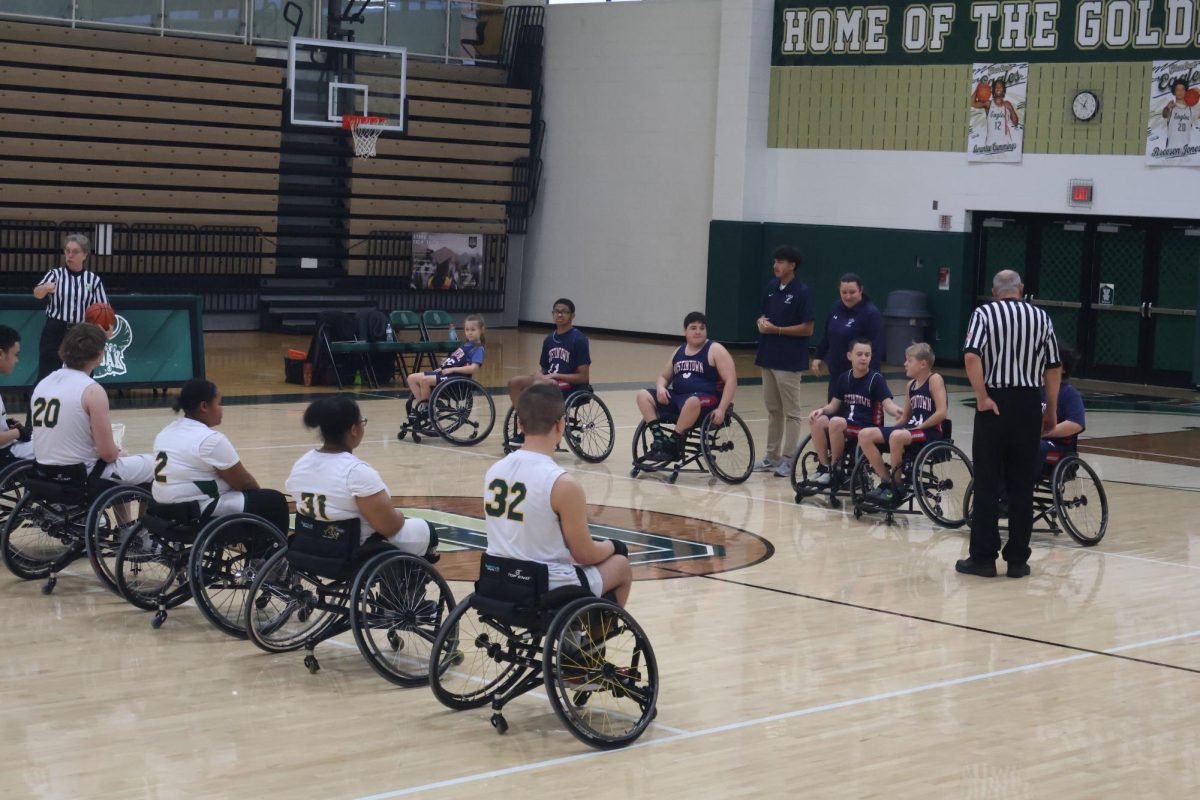
The clatter of wheels on the gym floor, the sharp bounce of basketballs, and at the center of it all, the GlenOak wheelchair basketball team, a group of students spanning grades third through 11th, has worked to create a culture of support, communication and perseverance.
The team is made up of both disabled students, known as class ones, as well as students without disabilities who choose to play the game known as able bodies (AB’s).
Coach Kristin Wellman, who stepped into the head coach position last year, after starting as an assistant, describes the team’s identity as “cohesive; everybody is there to help each other. Nobody is there just to be the best on the team.”
Wellman emphasized that building trust and understanding each player’s abilities is essential.
“It’s not just about passing; it’s about knowing your teammates,” Wellman said. “Can they handle a bounce pass? A chest pass? Who’s going to be our shooter, our passer, our defender? Everyone has their own strengths, and we use those to make the team better.”
AB players play a supporting role for class one athletes rather than a scoring role. They help move the ball quickly when needed, communicate on the court and create space so class one players can get into strong scoring positions with their scoring limited to only six points per game.
ABs also face unique challenges on the court. Sophomore Cole Montgomery-Maher describes learning to dribble while controlling the wheelchair.
“Every time I pushed the wheelchair and bounced the ball, I was either focusing on moving forward and not able to stop, or when I grabbed the ball, I’d stop and forget to move,” Montgomery-Maher said. “It took a lot of practice, a lot of pushing, strong arms and guidance from my teammates.”
The payoff for all the hard work comes in moments like last season’s second-round tournament game against Worcester. The team was once trailing by six points but ended up winning the game by two.
“The way the team just put their heart and soul into that game was incredible. Everybody was taking care of each other. Nobody was yelling at each other. We were in it because we all had the same goal,” Wellman said.
For junior Marayah Nicholson, the feeling of being in sync on the court is exhilarating. Nicholson also stressed the significance of the representation of disabled individuals in basketball.
“You don’t see this happen often, where kids without disabilities are being around kids with disabilities and working with them. Everybody should have access to sports, to social life, to competition. And it’s very important to support that for everybody,” Nicholson said.
The team’s current record is 2-6 and their next game is at Hoover on Jan 21. There are no requirements to join the team, and any student is encouraged to join